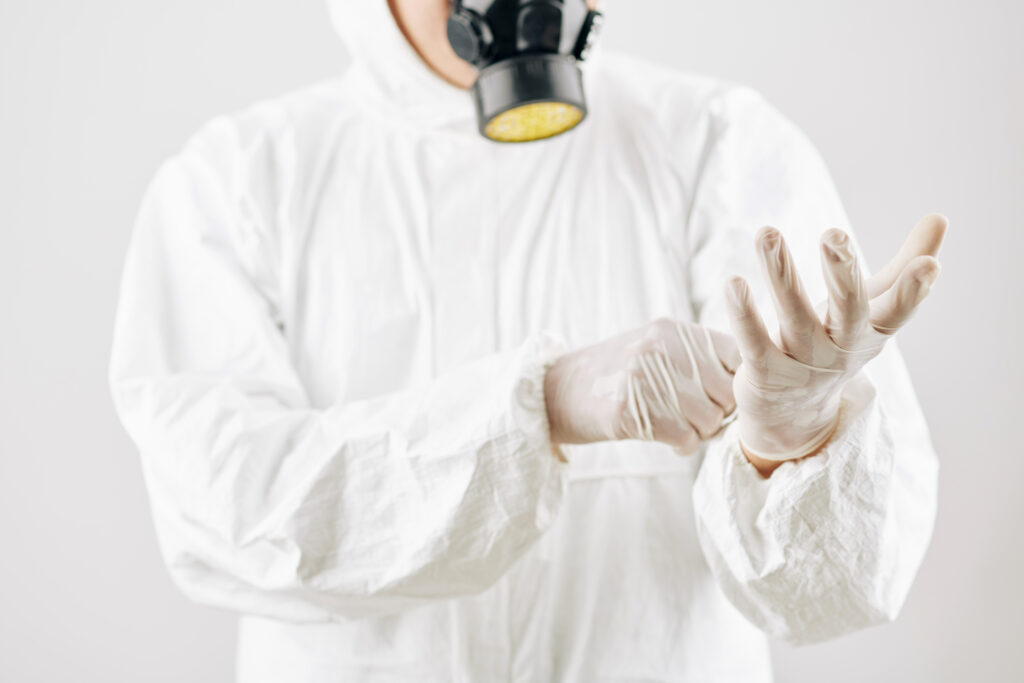
🛠 Our Mold Remediation Process
1. Inspection & Testing
We assess visible mold and use moisture meters and infrared imaging to detect hidden growth within walls, ceilings, and building systems.
2. Containment
To prevent cross-contamination, affected areas are isolated using industry-standard containment barriers and negative air pressure.
3. Air Filtration
HEPA air scrubbers and filtration systems capture airborne spores to improve indoor air quality throughout the facility.
4. Mold Removal
Contaminated materials are safely removed or cleaned using commercial-grade antimicrobial treatments and approved remediation techniques.
5. Structural Drying & Dehumidification
We eliminate excess moisture to prevent mold from returning and stabilize affected building materials.
6. Restoration & Prevention
Damaged areas are repaired and treated with long-term preventative solutions to reduce the risk of future mold growth.
⭐ Why Choose Onsite Restoration?
• IICRC-certified mold remediation specialists
• Commercial-grade containment and air filtration systems
• Comprehensive inspection and moisture-control solutions
• 24/7 emergency response for urgent mold situations
• Insurance coordination and claims documentation support
⚠️ Risks of Mold in Commercial Properties
• Indoor Air Quality Degradation – Mold spores circulate through HVAC systems and occupied spaces.
• Structural Deterioration – Mold breaks down drywall, wood framing, and insulation over time.
• Persistent Odors – Musty odors embed into porous materials and ventilation systems.
• Property Devaluation – Mold issues can impact building inspections, leasing, and resale value.
❓ Frequently Asked Questions
What causes mold growth in commercial buildings?
Moisture intrusion from leaks, flooding, or high humidity creates conditions for mold growth in structural materials and HVAC systems.
How can I detect hidden mold?
Musty odors, staining, or unexplained air quality issues may indicate hidden mold. We provide professional inspections using advanced detection equipment.
Is mold dangerous in commercial environments?
Yes. Mold contamination can affect air quality and create unsafe conditions for building occupants if not professionally remediated.
Will mold return after remediation?
Not if the moisture source is corrected. Our process includes moisture control and long-term prevention strategies.
Does commercial insurance cover mold remediation?
Coverage depends on policy terms and cause of loss. We coordinate directly with insurance adjusters to assist with documentation and claims processing.